

Trimethoprim Test Kit
What Is Trimethoprim?

Trimethoprim is a commonly used synthetic antibacterial drug in veterinary field and it belongs to a type of chemically synthesized antibacterial enhancer antibiotic. It is not of natural origin but is specially designed in chemical structure to inhibit the folic acid metabolic pathway of bacteria, achieving an antibacterial effect. In terms of structure, trimethoprim belongs to the diaminopyrimidine derivatives. Its molecular characteristics enable it to bind highly selectively to bacterial dihydrofolate reductase, while having a relatively weak affinity for mammalian homologous enzymes, demonstrating relatively good selectivity and safety during the treatment process. This high degree of targeting is one of the important reasons for its wide application. Although its antibacterial spectrum is relatively narrow, it has a good effect on many common Gram-negative bacteria as well as some Gram-positive bacteria. Trimethoprim is a synthetic antibiotic with a clear mechanism, reliable effect and a long history of use. With its targeted inhibition of bacterial folic acid metabolism and significant synergistic effect with sulfonamide drugs, it plays an irreplaceable role in veterinary medicine.
Its scientific structure, metabolic characteristics and wide applicability make it an important component of the modern anti-infection treatment system.
Trimethoprim Mechanism of Action in Bacterial Inhibition
Trimethoprim is a commonly used broad-spectrum antibacterial drug that exerts its antibacterial effect by precisely blocking the folic acid metabolic pathway of bacteria. Folic acid is an essential substance for bacteria to synthesize DNA, RNA and protein. Bacteria must rely on their own pathways to synthesize folic acid. Trimethoprim precisely takes advantage of this metabolic difference to exert a highly selective inhibitory effect on bacteria. Firstly, trimethoprim can specifically inhibit bacterial dihydrofolate reductase. This enzyme is responsible for converting dihydrofolate to tetrahydrofolate in folic acid metabolism, which is a key step necessary for the synthesis of nucleic acids, purines and some amino acids. When trimethoprim binds to the dihydrofolate reductase of bacteria, it blocks this transformation reaction, preventing the bacteria from continuing to complete normal DNA and protein synthesis. Secondly, due to the deficiency of tetrahydrofolate, bacteria will rapidly lose their replication ability and disrupt the cell metabolism and eventually cease growth. Therefore, trimethoprim mainly exerts antibacterial effects. When used in combination with sulfonamides, it can form a synergistic effect, further enhancing the antibacterial effect.

Trimethoprim achieves highly selective and efficient antibacterial effects by precisely targeting the folic acid metabolic system of bacteria, while having a relatively small impact on human cells. It is a common research object for antibacterial mechanism in food safety testing.
Characteristics of Trimethoprim
Trimethoprim is a synthetic broad-spectrum antibacterial drug. Its unique chemical properties and clear mechanism of action have made it widely used in veterinary field. The characteristics of trimethoprim are mainly reflected in its chemical structure, antibacterial mechanism, antibacterial spectrum and environmental stability.
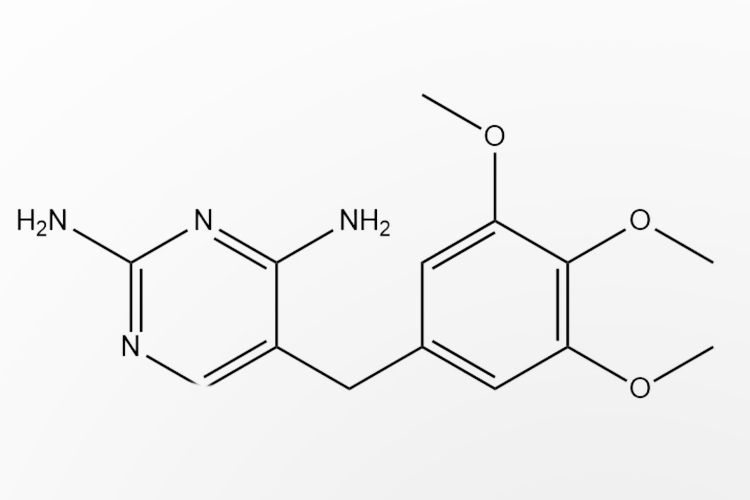
Unique chemical structure and targeted selectivity
The molecular structure of trimethoprim enables it to highly specifically bind to the dihydrofolate reductase of bacteria, effectively blocking the reduction process of folic acid. This high selectivity not only ensures the safety of the drug, but also makes it reliable and stable in antibacterial treatment and related detection research.
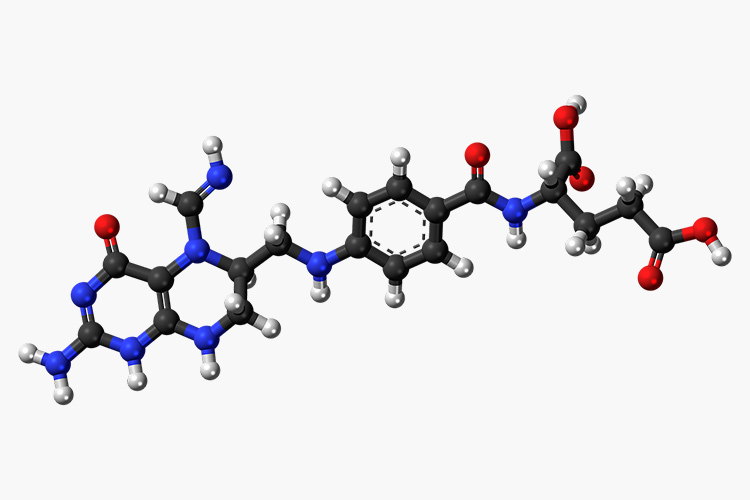
Stable mechanism and clear antibacterial effect
The core function of trimethoprim is to inhibit the synthesis of bacterial DNA, RNA and protein. Trimethoprim prevents bacteria from generating tetrahydrofolate, a key molecule essential for the synthesis of nucleoside and protein. The blocking of folic acid metabolism directly leads to the arrest of cell growth and restricted reproduction, exerting an antibacterial effect.
Broad-spectrum antibacterial activity
Trimethoprim has a good inhibitory effect on many common pathogenic bacteria, especially Gram-negative bacteria. At the same time, it also has a certain antibacterial effect on some Gram-positive bacteria. Although its antibacterial spectrum is not as comprehensive as that of some new broad-spectrum antibiotics, it is highly targeted and has a clear antibacterial effect.

High stability and environmental resistance
Trimethoprim has stable chemical properties and will not degrade significantly when stored for a long time at room temperature. It has strong tolerance to changes in light and temperature. This stability not only ensures the effectiveness of the drug during production, storage and transportation, but also enables it to remain active in complex environments.
Sources of Trimethoprim in Honey

Use of veterinary antibiotics in beekeeping
Beekeepers often use antibiotics such as trimethoprim to prevent or treat bacterial infections in bee colonies, including diseases like American foulbrood or European foulbrood.

Medicated feed or syrup additives
In some beekeeping operations, sugar syrups or other supplemental feeds containing antibiotics are provided to bees as a preventive measure. Therefore, although it is beneficial for colony health, it can introduce trace amounts of trimethoprim into the honey.

Environmental contamination
Bees collect nectar and pollen from surrounding plants and flowers. If nearby agricultural fields have been treated with antibiotics or related compounds, bees may inadvertently bring these substances back to the hive, leading to indirect contamination of honey.

Improper use or withdrawal practice
Failure to follow recommended dosages or neglect the required withdrawal period after antibiotic treatment can result in higher levels of trimethoprim residues in honey. Proper management and adherence to guidelines are critical to minimize contamination.
Health Risks of Trimethoprim in Honey

Trimethoprim residue in honey may have certain effects on human health. Firstly, long-term or excessive intake of honey containing residual antibiotics may promote the development of drug resistance in the human intestinal flora, reducing the therapeutic effect of conventional antibiotics. Secondly, for people with drug allergies, trace amounts of trimethoprim in honey may cause allergic reactions such as rash and respiratory discomfort. In addition, long-term intake of trimethoprim residue may impose a burden on the liver and kidneys, affecting their metabolic and detoxification functions. Therefore, even if the residual amount of honey is below the limit, it is necessary to pay attention to its potential health risks.
The Importance of Testing Trimethoprim in Honey
Detecting trimethoprim in honey is crucial for ensuring food safety and protecting public health. Testing trimethoprim allows effective monitoring of residue levels, ensuring compliance with national and international safety standards and preventing potential harm to consumers from excessive residues. Also, detection helps prevent the spread of antibiotic resistance, reducing the risk of resistant strains developing in human gut microbiota. Furthermore, timely testing safeguards the reputation of honey producers, preventing market risks caused by excessive residues. Therefore, detecting trimethoprim is not only a necessary measure for food safety regulation but also a key step in protecting consumer health and supporting sustainable industry development.

Introduction to Trimethoprim Test Kit
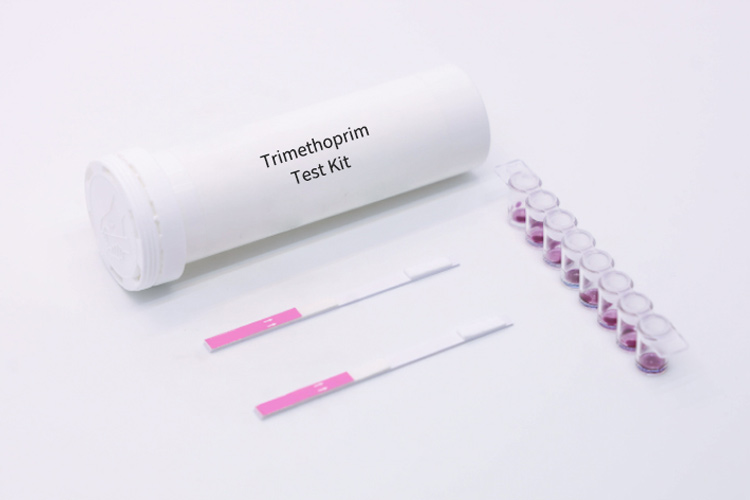
Trimethoprim test kit, also called trimethoprim residue test kit, is a rapid and reliable solution for detecting trimethoprim residue in honey. It is designed to provide accurate, on-site results, allowing beekeepers, food processing factories and quality control laboratories to monitor antibiotic residues efficiently. Trimethoprim test kit is based on gold immunochromatographic assay, commonly known as lateral flow assay. The test kit contains a nitrocellulose membrane with immobilized trimethoprim antibodies at the test line T line and control antibodies at the C line. When a sample without trimethoprim is applied, the gold-labeled antibodies bind to the T line, producing a visible colored line. If trimethoprim is present in the sample, it competes with the immobilized conjugates for binding to the gold-labeled antibodies, preventing or reducing binding at the T line. As a result, the T line appears faint or disappears completely, indicating the presence of trimethoprim. The C line always appears as a procedural control to confirm the test is valid. The intensity of the T line can be interpreted visually or quantified using a portable reader for higher accuracy.
The kit features a user-friendly design, requiring minimal sample preparation and delivers results within minutes without the need for complex equipment. By using this test kit, producers can ensure compliance with national and international food safety standards, protect consumer health and reduce the risk of antibiotic resistance development.
Advantages of Trimethoprim Test Kit
Rapid detection for on-site testing
High sensitivity and specificity
Easy to use and interpret result
Suitable for various applications
Portable and user-friendly design
Cost-effective testing for residue

Key Parameters of Trimethoprim Test Kit
| Item | Parameter |
|---|---|
| Analyte | Trimethoprim |
| Sample Type | Honey |
| Gross Weight | 0.3 kg |
| Dimension | 19*6.5*13.5cm |
| Storage | Store at 2-8°C, out of sun light and moisture |
| Shelf Life | 18 months |
| Sensitivity | 5 ppb |
Inquiry for Trimethoprim Test Kit
We would like to hear from you. Please send us a message by filling out the form below and we will get back with you shortly.